


Introducing the puzzle
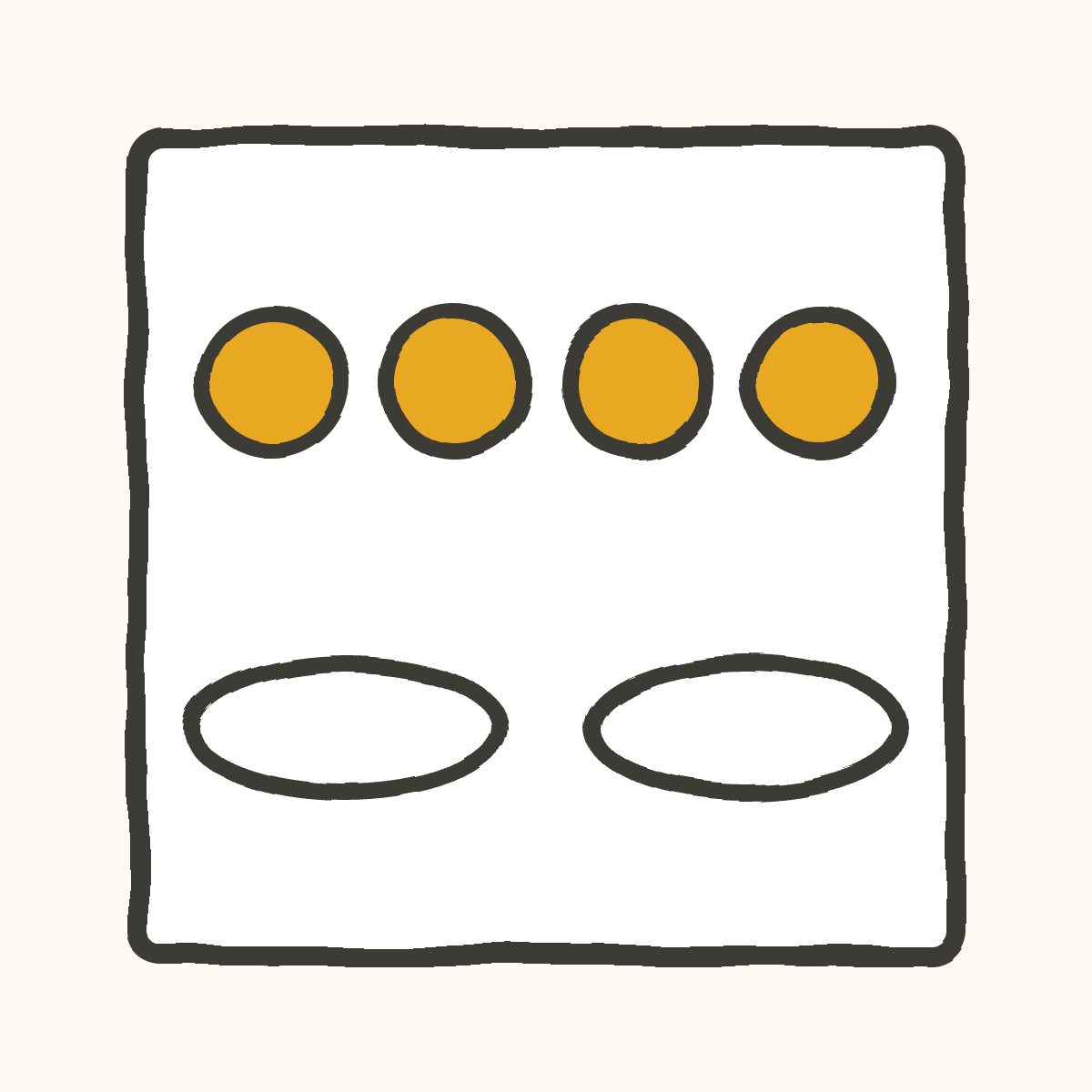
Say: “We’ve made pancakes and we want everyone to get the same amount.”
Draw: The pancakes and plates below (the kids re-draw the pancakes onto the plates).
Starter
“We have 4 pancakes and 2 plates. How many pancakes on each plate?”
Main
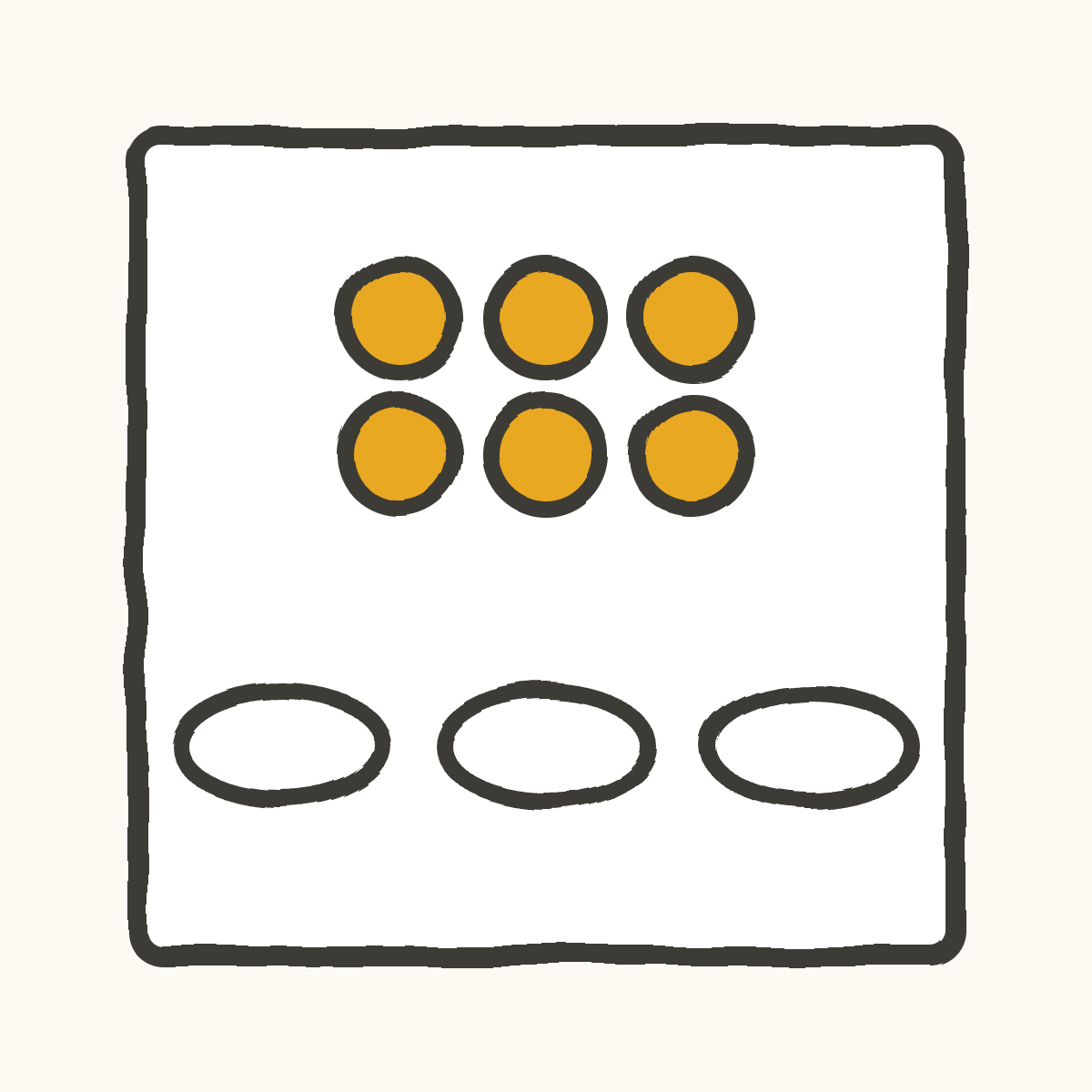
“We have 6 pancakes and 3 plates. How many pancakes on each plate?”
“What if we had 9 pancakes?”
Dessert
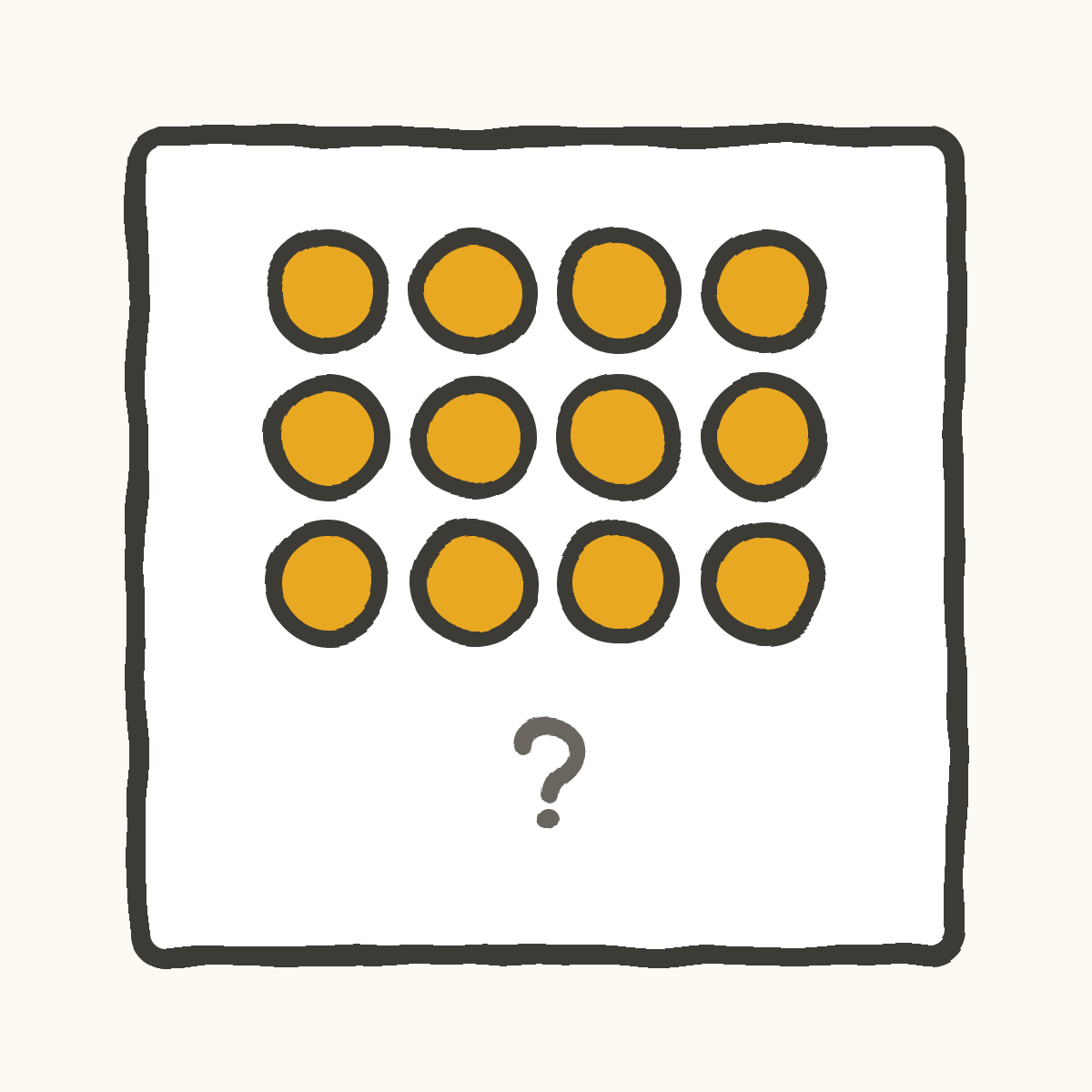
“We have 12 pancakes. If every plate has to get the same, how many plates could we have? Find all the different numbers of plates that work.” (We can’t chop the pancakes!)
Tips for grown-ups
If you have time, use real plates and coins or raisins etc. There’s lots of research on the benefits of switching between “manipulatives” and pen-and-paper approaches.
Try framing this as a game you’re all playing, rather than a problem you’re setting. “Here’s a puzzle I found, can we do it together?” Make some wrong guesses and think out loud as you check your answer.
Branch of mathematics
Arithmetic. This puzzle is about division, one of the four basic operations of arithmetic. Children run into division every time something has to be shared fairly! Numbers that share out well have always been popular. The Babylonians counted in 60s because 60 divides evenly by lots of numbers, and that’s why we still have 60 minutes in an hour and 360 degrees in a circle.
Answers
Starter: 2 on each plate.
Main: 2 on each plate. With 9 pancakes, 3 on each plate.
Dessert: 1, 2, 3, 4, 6 or 12 plates.
Let us know how it went!