


Introducing the puzzle
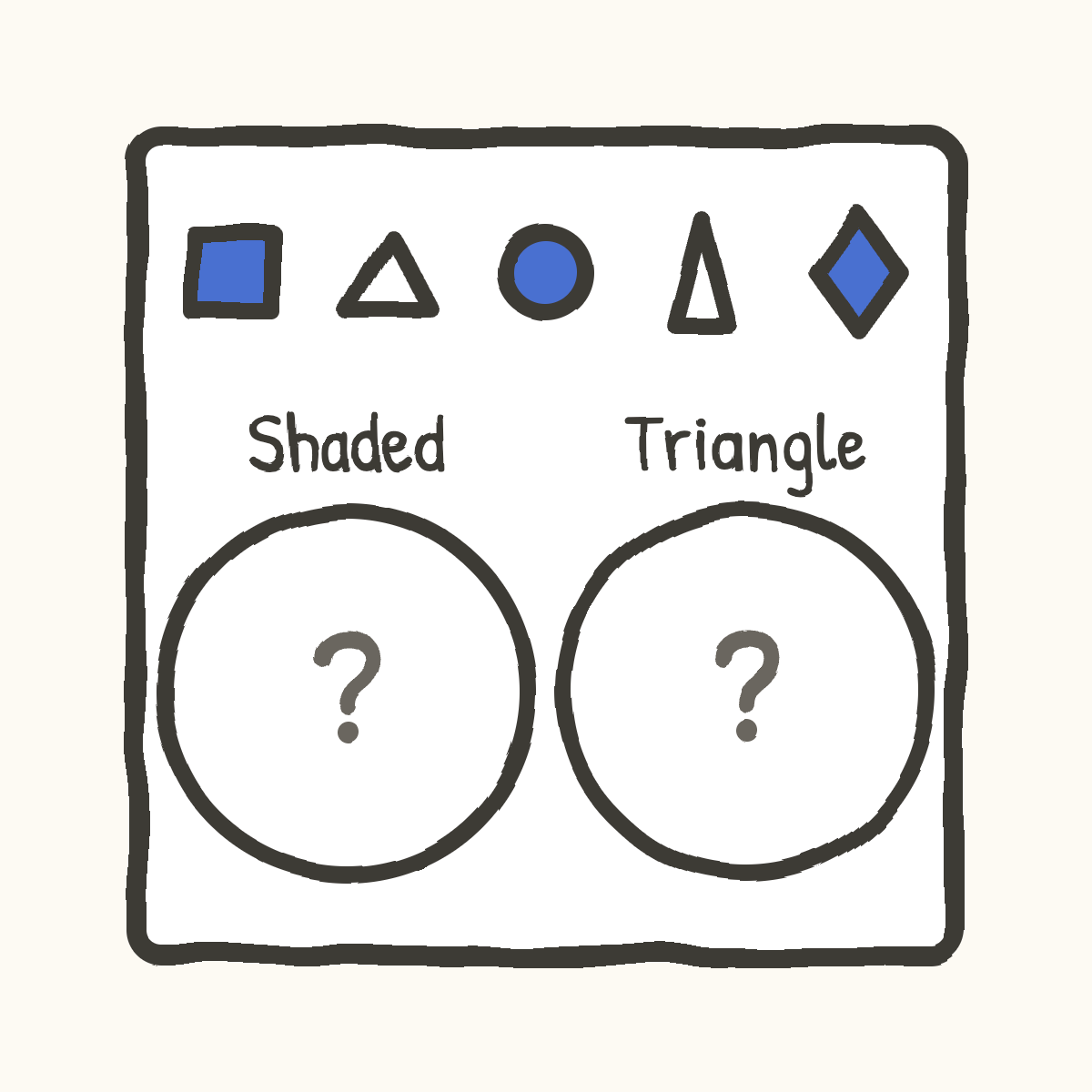
Say: “We need to put each shape in the hoop it belongs in.”
Draw: The hoops and shapes below. They can re-draw each shape into its hoop.
Starter
“This hoop is for shaded shapes, and this hoop is for triangles. Where does each shape go?”
Main
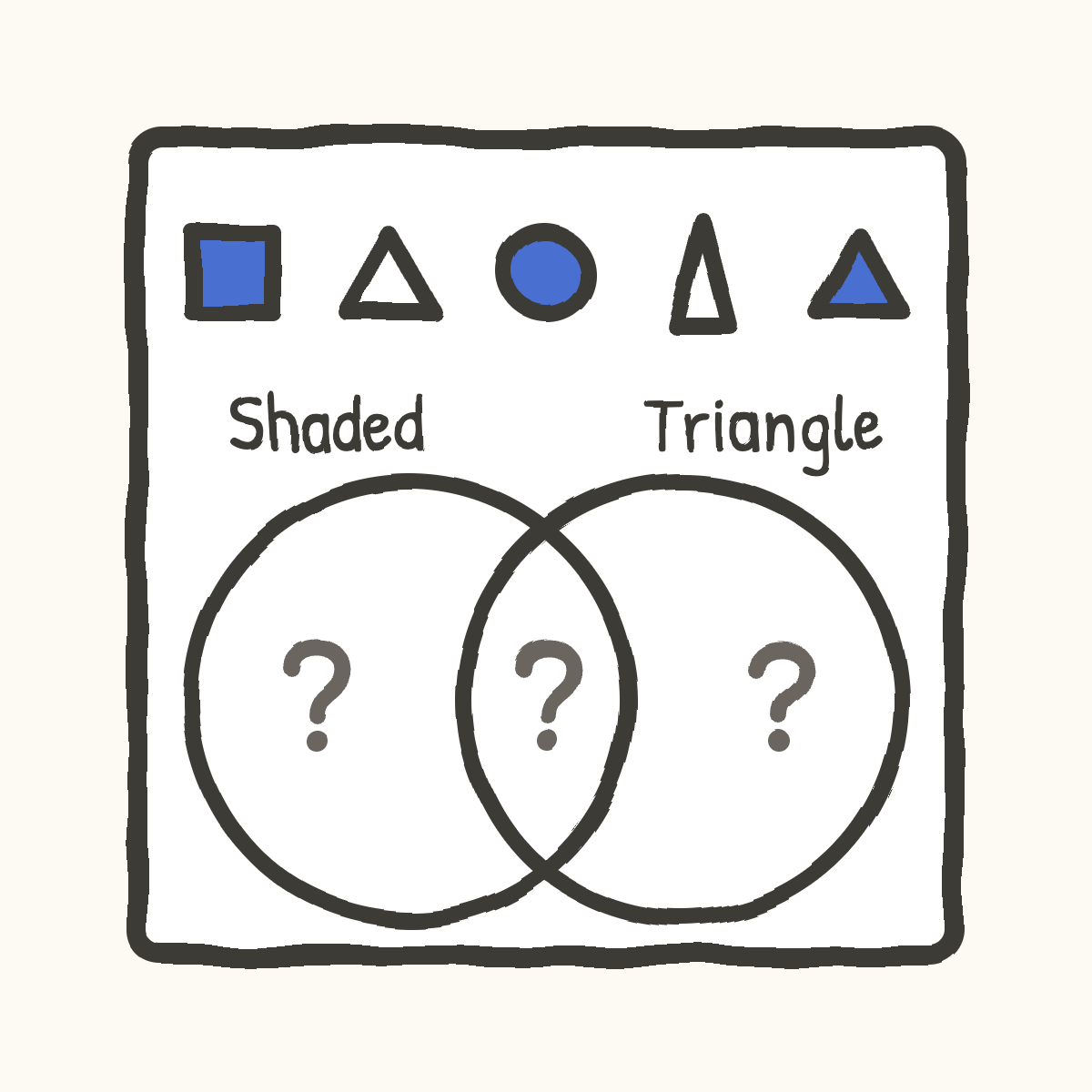
“Now the hoops overlap. Where does each shape go?”
Dessert
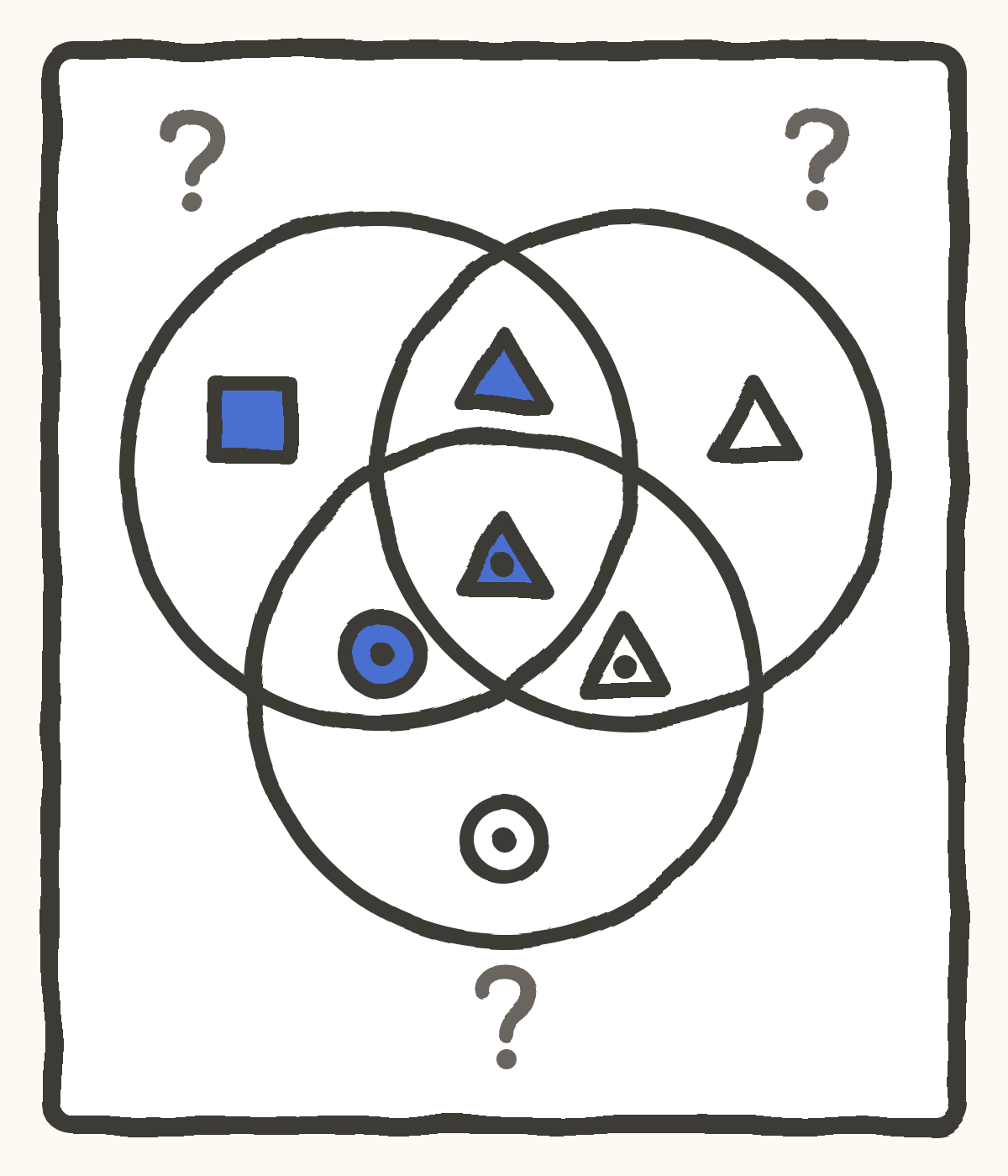
“I’ve sorted these already. Can you figure out the rule for each hoop?”
Tips for grown-ups
If you have time, cut out paper shapes and use string to create the rings. The more physical you can make it, the better they’ll engage and learn.
In Dessert, one hoop has a new rule. Try making wrong guesses: “Maybe this hoop is for circles?”
Stretch question: “Can you add more shapes into these hoops?”
Branch of mathematics
Sets. A set is a collection of things that share a property. We call hoops like these “Venn diagrams”, though John Venn didn’t invent them: Leonhard Euler was drawing overlapping circles to show sets more than 100 years earlier. Venn’s version, from 1880, arranged the circles so that every possible combination of sets is shown, regardless of whether anything belongs there.
Answers
Starter: shaded hoop contains: shaded square, circle and diamond. Triangle hoop contains: two triangles.
Main: shaded hoop contains: shaded square and circle. Triangle hoop contains: two plain triangles. Overlap contains: shaded triangle.
Dessert: left hoop: shaded shapes. Right hoop: triangles. Bottom hoop: shapes with a dot.
Let us know how it went!